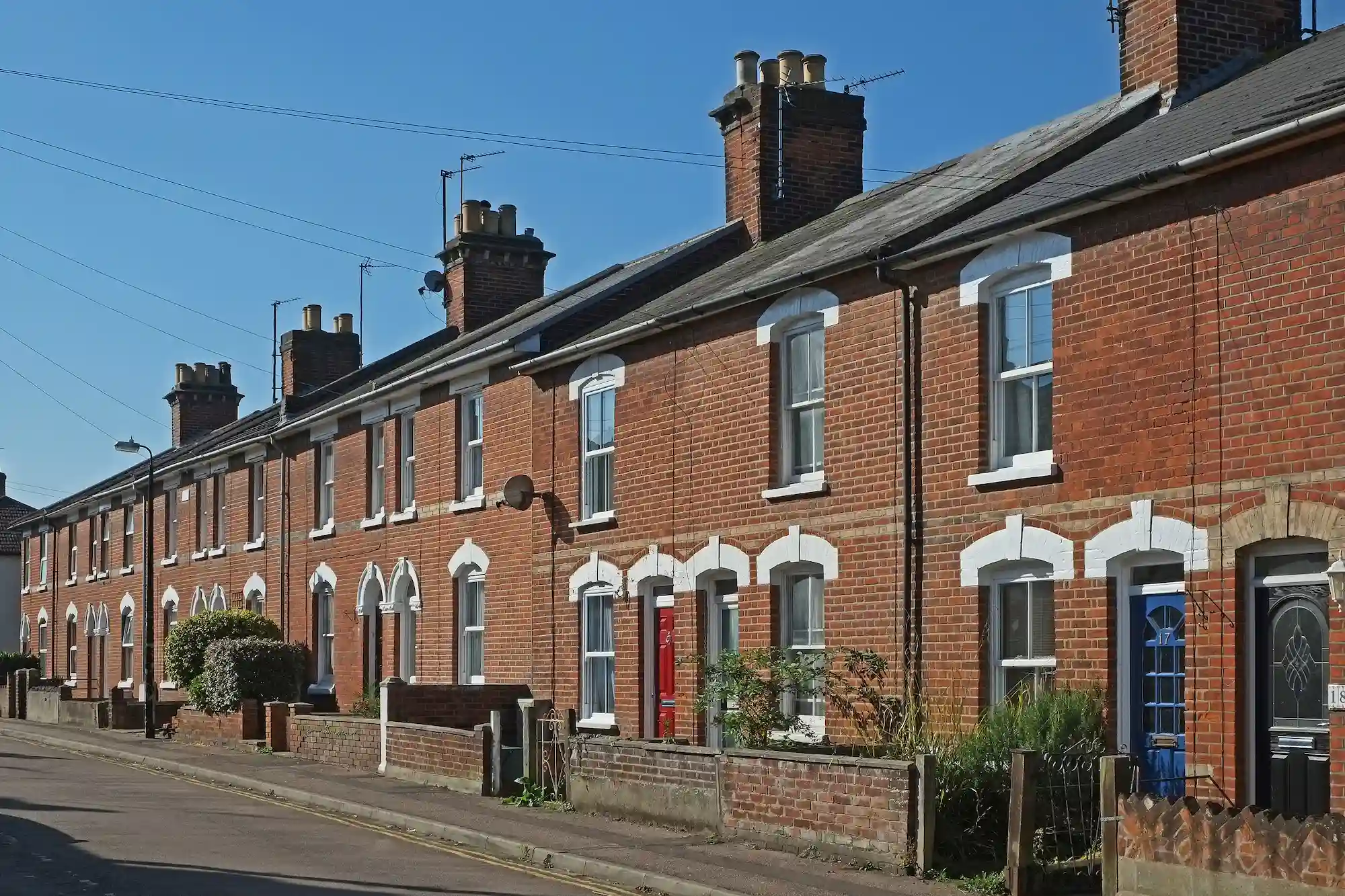
THE FUTURE OF ENERGY PERFORMANCE CERTIFICATES (EPCs)
Energy Performance Certificates (EPCs) play a crucial role in advancing the UK’s retrofit goals by enabling professionals to assess building performance and inform decision-making. However, the current EPC system has faced widespread critique, with calls for reform to make it a more effective tool for large-scale, high-quality retrofit initiatives.
Recognising this need, the National Retrofit Hub (NRH) published The Future of Energy Performance Certificates: A Roadmap for Change, a comprehensive report advocating essential updates to EPCs.
The report draws on a literature review and engagement across the retrofit sector. This included workshops and a survey gathering insights from more than 300 people.
An eight-stage roadmap for EPC reform
The roadmap explores how EPCs can better support high-quality retrofit and help people understand their homes.
Its eight stages recommend:
- Set clear targets for improving EPCs and increasing their uptake.
- Improve cost and carbon metrics so they provide more useful information.
- Introduce confidence ratings to communicate the reliability of assessment data.
- Offer additional metrics with a better interface to meet different users’ needs.
- Improve recommendations to support better decisions about home upgrades.
- Connect information through Digital Building Logbooks so building data remains accessible and useful.
- Introduce more trigger points for obtaining or updating an EPC.
- Build public awareness through a national campaign and a proposed EPC rebrand.
These are NRH’s recommendations for change. They should not be read as a description of adopted government policy.
Read the roadmap
Read or download the report below to explore the evidence and proposals behind each stage.
Read the full report
The full text of the roadmap, section by section. Select a section to read it.
Introduction
Energy Performance Certificates (EPCs) play a crucial role in retrofitting the UK’s buildings: informing policy, finance and household decision making. The National Retrofit Hub has conducted an in-depth exploration into how EPCs could be reformed to enable the local delivery of good quality retrofit at scale. We conducted cross-sectoral engagement to build a consensus on the change needed, presented here in an eight-stage roadmap.
This work has been supported by a range of organisations and was made possible through engagement across all sectors that are impacted by retrofit. Read on for a collective vision for the future of Energy Performance Certificates.
Supporters
This document was prepared by the National Retrofit Hub with input from our working group participants, insights from our working group chairs and engagement with the wider industry.
- Our work on EPC reform is sponsored by: Lendology CIC, Mixergy and Knauf Insulation.
- Engagement with finance professionals was facilitated by: Bankers for Net Zero.
- Industry survey was conducted in collaboration with: Futurebuild.
- The NRH is supported by our Partners and Sponsors, alongside: UKRI Innovate UK and The MCS Foundation.
Methodology
At the National Retrofit Hub we facilitate those working within the retrofit sector to come together, collaborate and share knowledge. Our approach to this study was to understand the recommendations already on the table, explore the attitudes and needs of our network, and to bring in views from all stakeholder groups. Our ambition was to form a consensus on the changes needed to EPCs to enable good quality retrofit at scale.
1. Literature review
We collected reports on EPC reform from across and beyond the built environment sector, utilising desktop research and recommendations from our network. We identified the key topics, and wrote a short summary of the recommendations included in each report. We published an evolving, searchable and filterable library of these reports on our website.
We identified the following common themes found within reports calling for EPC reform, and used these to structure our next steps:
- Presentation & Accessibility
- Consumer Awareness
- Upgrade Recommendations
- Metrics
- Validity Period
- Scope & Purpose of EPCs
- EPC Data Access
- Assessor Training & Competence
- Finance
We published a summary of this literature review within an interim report.
2. Engagement
We explored the common themes within a series of engagement workshops, each focusing on a different stakeholder group. The workshops we convened and facilitated were as follows:
- Standards, technical design and project planning: over 100 industry professionals from the National Retrofit Hub’s Working Groups 1 and 2.
- Financial specialists: 30 banks, building societies and financial professionals, convened in partnership with Bankers 4 Net Zero.
- Citizen engagement: over 60 consumer advice, communications and community representatives from the National Retrofit Hub Working Group 6.
We started each session with a presentation from a relevant industry expert:
- Andrew Parkin chair of the Property Energy Professionals Association (PEPA), giving an insight on the EPC process from the Domestic Energy Assessor perspective.
- Heather Buchanan, Elliot Cyriax and Elena Perez Celis of Bankers 4 Net Zero on their research into the need for EPC reform from the finance sector.
- Justin Macmullan of Which? on their research into consumer attitudes and needs for EPCs.
We then utilised an audience engagement platform (Mentimeter), with interactive polls and comment boxes, alongside open discussion to explore a selection of the common themes.
3. Industry survey & expert feedback
Finally we tested key attitudes, thoughts, perceptions and recommendations within a broad industry survey, conducted in collaboration with Futurebuild. The survey collected insights from over 300 people within and beyond the sectors influenced by retrofit. Respondents included: consultants, designers, academics, community organisation members, contractors, installers, developers, finance professionals, local authorities, manufacturers, merchants, charities, and more.
We also utilised one-to-one discussions with industry experts, and consulted with the National Retrofit Hub advisory panel to finalise proposals in this report.
4. Limits of the study
The following topics were out-of-scope for this study:
- Policy related to EPC ratings, e.g.: Minimum Energy Efficiency Standards (MEES)
- Calculation methodologies, including SAP and the emerging Home Energy Model (HEM)
- Routes to the inclusion of innovative products within Appendix Q and the PCDB
We identified, but did not focus in detail on the following common theme:
- Assessor Training & Competence
How are EPCs used?
Energy Performance Certificates are currently used by many stakeholders for different reasons. Some stakeholders have an interest in individual EPCs, whereas others utilise the aggregated data provided by multiple EPCs. One common use for EPCs is demonstrating compliance, as this is linked directly to government policy and regulations.
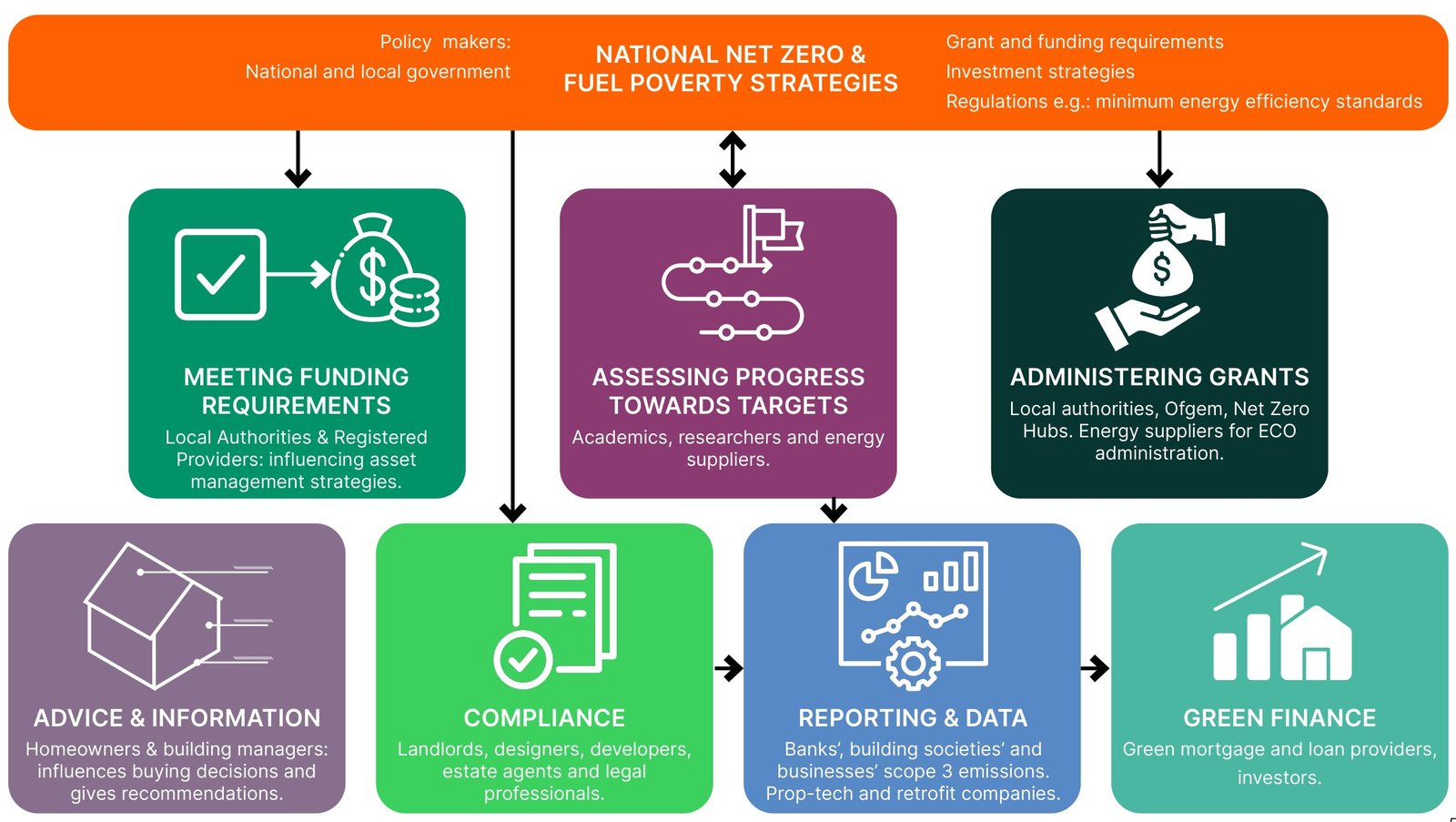
- Meeting funding requirements: Local Authorities & Registered Providers: influencing asset management strategies.
- Assessing progress towards targets: Academics, researchers and energy suppliers.
- Administering grants: Local authorities, Ofgem, Net Zero Hubs. Energy suppliers for ECO administration.
- Advice & information: Homeowners & building managers: influences buying decisions and gives recommendations.
- Compliance: Landlords, designers, developers, estate agents and legal professionals.
- Reporting & data: Banks’, building societies’ and businesses’ scope 3 emissions. Prop-tech and retrofit companies.
- Green finance: Green mortgage and loan providers, investors.
We have also considered the history behind EPCs, and the crucial role EPCs can play for householders.
EU Energy Performance of Buildings Directive (EPBD)
The introduction of EPCs can be traced back to the EPBD, adopted in 2002, revised in 2010 and 2018. This directive aimed to enhance the energy performance of buildings across member states, promote energy-efficient technologies, and reduce greenhouse gas emissions.
In 2024 the EPBD was revised to put Europe on track to achieve a fully decarbonised building stock by 2050. Updates included: requirements for reductions in primary energy use for buildings, new standards for new buildings, the introduction of ‘Building Renovation Passport’ schemes, and enhanced safeguards for tenants. These updates do not apply to the UK, since leaving the EU.
Householders
Energy performance certificates are the first, and sometimes only, way that householders interact with the performance of their homes. There are no other universal mechanisms available to householders to provide this information, without the appointment of specialists, advisors or consultants.
It is fundamental that EPCs work for the householder: it’s the only tool they have, and they pay for it!
Here, by householders we mean: homeowners, tenants and private landlords.
So, what’s the problem?
Our research focused specifically on eight of the common themes identified through literature review and industry engagement. The following issues were highlighted:
Metrics
The headline metric within EPCs is the ‘Energy Efficiency Rating’, which is based on predicted energy cost per square meter per year. An ‘Environmental Impact Rating’ (EIR) is also, based on the GHG emissions per square meter per year. Issues associated with current metrics include:
- Metrics are confusing, e.g.: Energy Efficiency Rating (EER) is actually a measure of energy cost rather than efficiency.
- The EER, rather than the EIR is used to set policy related to carbon targets, which means reductions in carbon emissions are not properly prioritised. For example, the EER incentivises cheaper gas over more expensive, but lower carbon, electricity.
- Current metrics do not incentivise the optimum changes to homes that enable low carbon heating, such as fabric upgrades.
- The 1 to 100 scale is opaque and does not relate to actual units of energy.
- EPC ratings cannot be easily compared with real-world energy use, and ratings do not include all energy consumed within a dwelling.
Validity and access
EPCs are currently valid for 10 years and 40% of homes do not have an EPC. Evidence from Which? suggests that when an EPC has information that is out of date consumers are likely to disregard all information contained.
Upgrade recommendations included within EPCs
Currently, some basic and high-level recommendations are provided within an EPC, on how a householder might improve the performance of their home. Issues highlighted on these recommendations include:
- Costs and energy savings estimated are often inaccurate and unreliable.
- Ventilation and other measures that relate to health and wellbeing are not considered.
- Maintenance is not mentioned within EPC recommendations but plays an important role in improving building performance.
- Recommendations are not presented as a whole-house approach.
EPC data access
In the last few years more data from EPCs has been made available to the industry. However, there is still a large portion of the input data that is not available to the Government, or other stakeholders (such as room heights). Access to this data would be valuable for quality control, project planning and stock model analysis.
Consumer awareness
A survey by Santander showed that 58% of consumers did not know what an EPC was. Consumer awareness is fundamental to incentivise householders to upgrade the performance of their homes.
Presentation and accessibility
The current format is an online website, with one graphic, text and tables. There is limited interactivity or signposting, and opportunities are missed to educate and enable users. The ‘flow’ between different pieces of information is not intuitive, and the impacts of potential improvements are not well expressed. More graphics, hyper-links and diagrams would improve engagement. Which? has conducted extensive research into this topic.
Scope and purpose of EPCs
The potential of EPCs are not being fully utilised. They could, for example, be used to: set carbon performance requirements for buildings linked to the UK’s carbon budgets, encourage and enable smart energy use, or to engage householders on their home’s health and climate resilience.
Finance
The finance sector has concerns around the accuracy, reliability and comparability of EPCs. The inaccuracies in EPC data limit the ability of financial institutions to accurately fund properties. A lack of reliable data hinders the ability to provide appropriate financing and investment. Financial institutions rely on EPCs for compliance and emissions tracking, and the information available for this should be improved.
Industry survey results
In partnership with Futurebuild, we conducted a survey of over 300 industry professionals, including consultants, designers, local authorities, and contractors. Respondents shared their insights on the current state and future of EPCs. Key results are summarised here:
- 57% of respondents had little to no trust in rating and contents of an EPC. This distrust is especially high among consultants and contractors.
- Only 5% of respondents thought that an energy cost metric should be used to set Net Zero Targets (as is currently the case). Most respondents felt that a carbon metric or energy use intensity should be used (with a consideration for energy cost).
- Many respondents were keen to see Energy Use Intensity better used within EPCs.
- 87% of people thought that information on a building’s impact on occupant health and wellbeing should be included.
- EPCs struggle to drive home improvements. 58% of respondents felt EPCs “slightly” or “moderately” encourage homeowners to make energy improvements. Many suggested this was due to improvements needed to the recommendations given within an EPC.
- 85% of respondents favour including recommendations for repair and maintenance within EPCs.
- 89% of respondents wanted EPCs to consider the risk of climate change on occupant health, by including overheating risk, with recommendations for mitigation.
- There is a weak link between fair green finance and EPCs. Most people do not think that the current link between EPCs and green finance fairly incentivises the upgrade of the nation’s homes.
- 41% reported they “rarely” or “never” use EPC recommendations for project planning or advising clients. The low influence on professional decision making was felt most by contractors, with 50% rarely relying on EPCs.
- 80% of respondents supported the inclusion of data on peak energy demand, believing it would contribute to energy grid management.
- 86% of respondents wanted to see real-world data incorporated into EPCs.
A roadmap for change
Understanding EPC stakeholder needs, and setting clear objectives, will help define short-term and longer-term priorities. Some change will take time, and we need to create mechanisms for the increased uptake of improvements. Stakeholders such as finance providers need planned transitions that ensure the continued functioning of green products based on EPCs. This roadmap identified eight key actions that should be taken, and explores each in detail.
Primary aims
- The information within EPCs is accurate, reliable and trusted.
- The right metrics are used to set targets and measure progress.
- Health and comfort are embedded.
- The opportunity to use EPCs as a portal building performance upgrade is fully utilised.
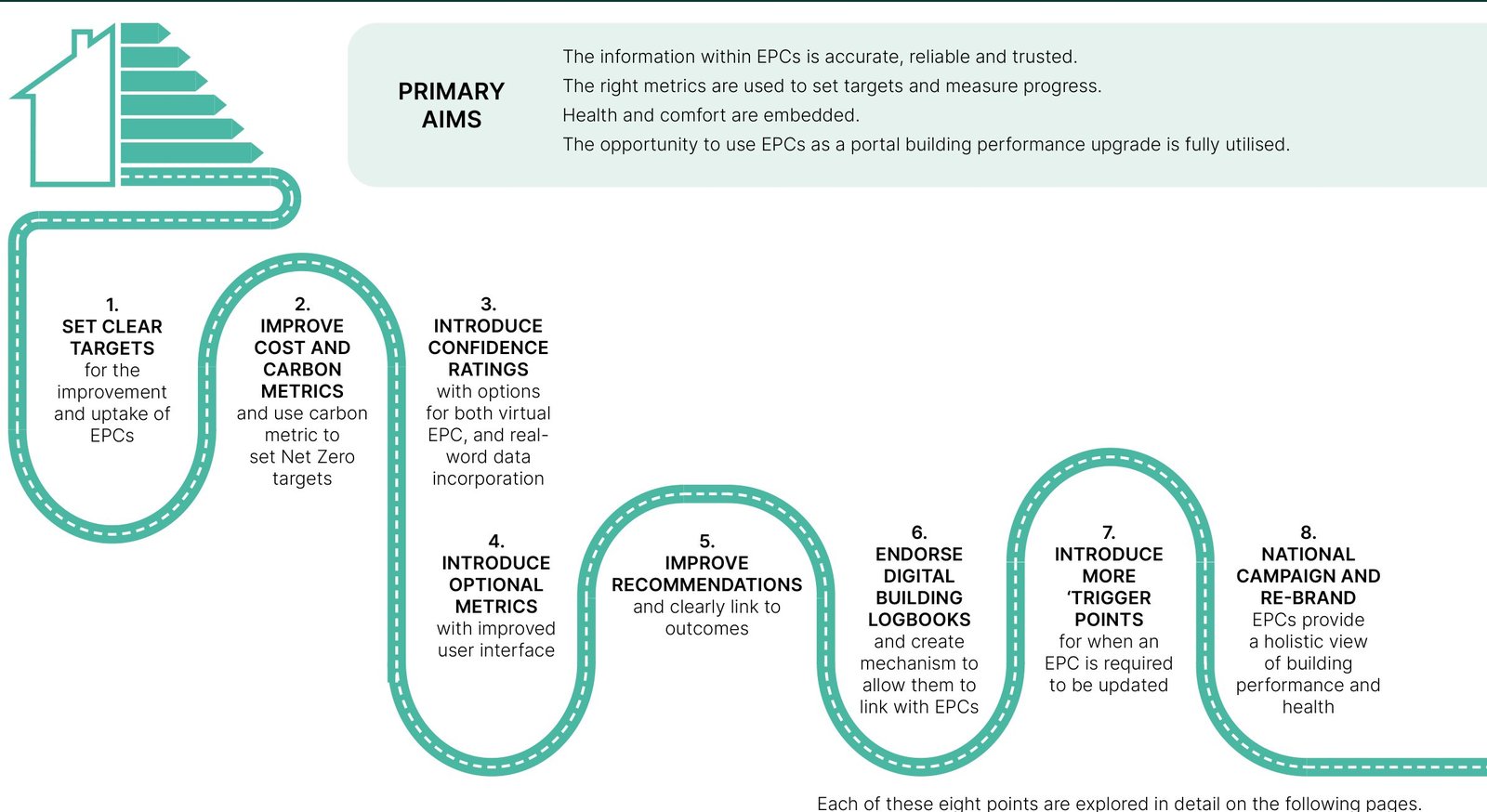
The eight steps
- Set clear targets for the improvement and uptake of EPCs
- Improve cost and carbon metrics and use carbon metric to set Net Zero targets
- Introduce confidence ratings with options for both virtual EPC, and real-world data incorporation
- Introduce optional metrics with improved user interface
- Improve recommendations and clearly link to outcomes
- Endorse digital building logbooks and create mechanism to allow them to link with EPCs
- Introduce more ‘trigger points’ for when an EPC is required to be updated
- National campaign and re-brand: EPCs provide a holistic view of building performance and health
Each of these eight points is explored in detail in the sections below.
1Set clear targets for the improvement and uptake of EPCs
The rest of the roadmap sets out how EPCs can be improved, and uptake increased, but targets with dates will help speed up this process. Some change will need to be prioritised over others, to ensure that the quality of EPCs is improved before uptake is increased. We don’t want to bake in poor quality data or mistrust.
The government should set clear targets for the improvement, expansion and uptake of EPCs. First improvements should be made to the cost and carbon metrics, alongside targets to increase the average confidence rating of EPCs. Next an increase in inclusion of optional metrics, and uptake of digital building logbooks should be targeted.
Targets for increasing the uptake of EPCs should follow for EPC improvements.
Targets required
- One-off improvements
- Average confidence rating
- Uptake of logbooks
- Uptake of optional metrics
- Percentage of homes with an EPC
A graph in the report indicatively shows that the confidence rating, recommendations and presentation of EPCs should be improved, before measures to increase the uptake of EPCs are put in place. Uptake of EPCs rises after recommendations are improved and after the EPC re-brand, following increases in confidence ratings, uptake of digital building logbooks and uptake of optional metrics.
This will mean those new to an EPC will receive an improved, more useful one.
2Improve cost and carbon metrics
The industry has many ideas on what metrics are most useful in an EPC. We concluded that cost and carbon metrics are critically important for householders, for setting net zero targets, and for the finance sector.
Literature review findings
Our literature review revealed that most organisations are advocating for a series of metrics, some examples include:
- Fabric Rating: space heat demand intensity in kWh/m2/yr. (The Climate Change Committee (CCC))
- Cost Rating: similar to the current EER, energy cost intensity in £/m2/yr. (The CCC)
- Heating System Type: the system type within a defined hierarchy. (The CCC)
- Energy: total energy use intensity in kWh/m2/yr. (The CCC)
- Climate Impact Metric: the emissions associated with the energy use. (Energy Systems Catapult)
- Heat Pump Readiness Indicator: based on building fabric, heat distribution system and local climate. (BEUC: The European Consumer Organisation)
- Smart Energy Metric: the home’s capacity to use energy flexibly, considering batteries, controls and PVs. (BRE)
Stakeholder engagement findings
Participants from our standards, technical design and project planning stakeholder workshop felt that the fabric rating was the most important metric for consumers, followed by the total Energy Use Intensity (EUI), cost, and climate impact metrics. When asked about a headline metric they thought either the EUI should be used, or no headline metric should be given.
However, our engagement with citizen / consumer facing organisations told a different story. This group concluded that the cost metric was both the easiest metric for consumers to understand, and the one that would motivate the most positive change. Some citizens might also be motivated by the climate impact metric, but much less consistently.
Stakeholders from technical and consumer facing organisations were keen to see the inclusion of health information and metrics within EPCs, and for these to move beyond pure ‘energy efficiency’ towards holistic ‘building performance’.
The first priority for participants within our finance stakeholder workshop was that metrics became more reliable, accurate and granular, to allow better comparison of properties, and analysis of data. Finance will follow the metric that is used for compliance (statutory emissions reporting and MEES), and currently this is the cost metric, however, the carbon metric is also important as this can give a better view of the bank’s scope 3 emissions. Finance providers also suggested the incorporation of an embodied carbon metric, however, we have not taken this suggestion forward as at present this would sit better within the UK Net Zero Carbon Building Standard framework, due to the complexity of reporting periods, data comparability and benchmarking.
The report includes a chart of consumer-facing stakeholders’ answers to “What metric would best motivate consumers”, covering fabric rating, cost rating, heating system type, total energy use intensity, climate impact, heat pump readiness indicator, smart energy metric and “I don’t know, more research is needed”. See the figure in the PDF, page 11.
Our approach
- Cost and Carbon Metrics: fundamental for citizens, policy-makers, financial institutions and many other stakeholders. We discuss retaining and improving these metrics.
- Background Information: technical stakeholders require more information, and this should be provided as a series of metrics within an ‘advanced view’. This information provides the backbone for metrics presented to householders.
- Optional Metrics: used to expand the way we view the performance of buildings, to include health, resilience and energy management.
The existing cost and carbon metrics are useful, but should be renamed for clarity, and improved in accuracy, with a dynamic link to live energy cost and fuel carbon intensity figures. The link between these metrics and energy use intensity should be made clearer for advanced users.
Cost metric
Example: a cost rating of B, with a typical energy cost of £1,250 per year at March 2024 energy prices.
The most important metric for most householders.
This rating should be based on energy use intensity (available in the advanced view, see below), plus fuel type costs. It should be used to set and measure progress against fuel poverty targets.
A rating should be presented alongside an average yearly cost. The cost should be dynamic, based on current energy prices, with a reference generated date.
Information could be provided on running costs should energy prices increase, similar to mortgage projections, i.e.: if the cost of electricity rises to ‘x’, the typical energy cost of this home per year will be ‘y’.
Carbon metric
Example: a carbon rating of Nearly Net Zero, with 2.5 tonnes of greenhouse gas emissions per year.
More prominence should be given to the carbon metric, and this should be used to set and measure progress against Net Zero and decarbonisation targets.
This rating should also be based on the energy use intensity, plus fuel type carbon factors.
Ratings could include: Net Zero, Nearly Net Zero, Moderate Emissions and High Emissions, presented alongside an average annual CO2 footprint. The metric should be aligned with the Net Zero Carbon Building Standard.
Householders should be able to click on the metric to receive further information on their heating system type and lower carbon alternatives.
Calculation methodology
The replacement of the Standard Assessment Procedure (SAP) with a ‘wrapper’ on the emerging ‘Home Energy Model’ has the potential to improve the accuracy and reliability of both the cost and carbon metrics within EPCs. This report does not analyse the proposed HEM in detail, and the NRH would suggest referring to insights from organisations such as CIBSE, LETI, BRE and the PassivHaus Trust.
The information given within an EPC on potential performance could be used in more ways, and providing bespoke estimates on energy cost could help householder engagement.
Example: a home rated B at £1,250 a year could become A at £965 a year with improvements, with a link to “Click here to find out what this means for you”.
Bespoke information
A householder should be able to click on their energy cost metric, and be linked through to a tool for a bespoke energy cost prediction. The user could input information on:
- how many people live in the home
- use patterns
- temperature set points
- heat pump in-use coefficient of performance (CoP)
- energy tariff
- appliances
They would be given a bespoke energy cost estimate, viewable only by them. Providing users with a login to an EPC portal would allow them to compare their bespoke energy cost predictions for a variety of homes.
Potential performance
Information on a building’s potential best cost and carbon performance should be retained and improved. This potential performance could be used to determine access to incentives, or green finance, so: if a householder improves their home as much as possible then they would be eligible for a lower mortgage rate, or low-cost loan, even if an EPC A is not possible for their home.
This could provide a fairer way of providing access to finance and incentives, and encourage the upgrade of all homes without putting those with existing constraints at risk.
Currently the ‘potential’ performance is viewed as unreliable, with participants highlighting that properties with more than one EPC can exceed their original potential EPC on the second EPC. This needs to be improved alongside better recommendations (see point 5).
EPC views
A series of EPC ‘views’ could provide information relevant to each stakeholder, without adding visual complexity and overwhelming householders. The data presented in the ‘advanced view’ would be the backbone for the metrics presented to householders.
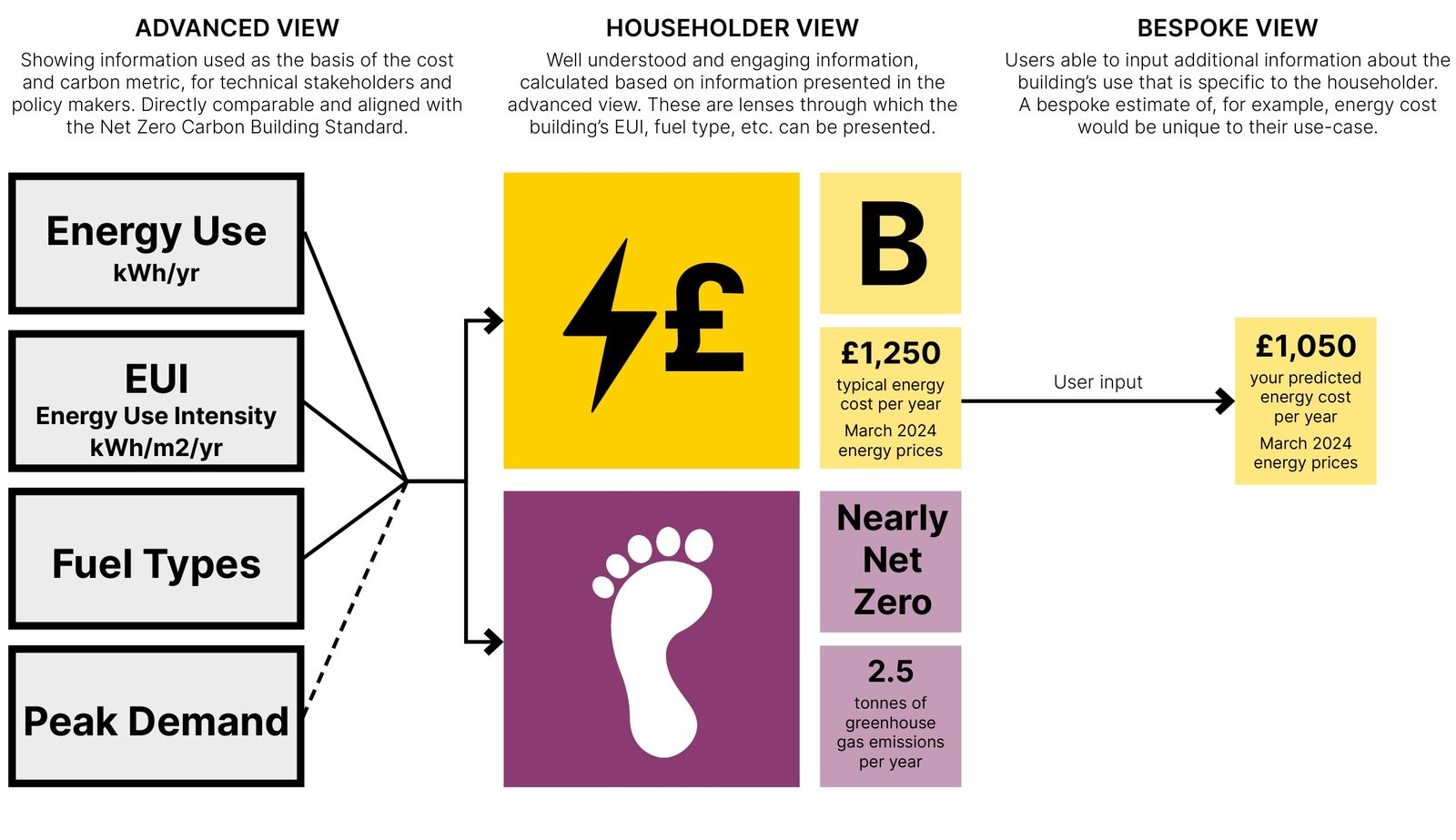
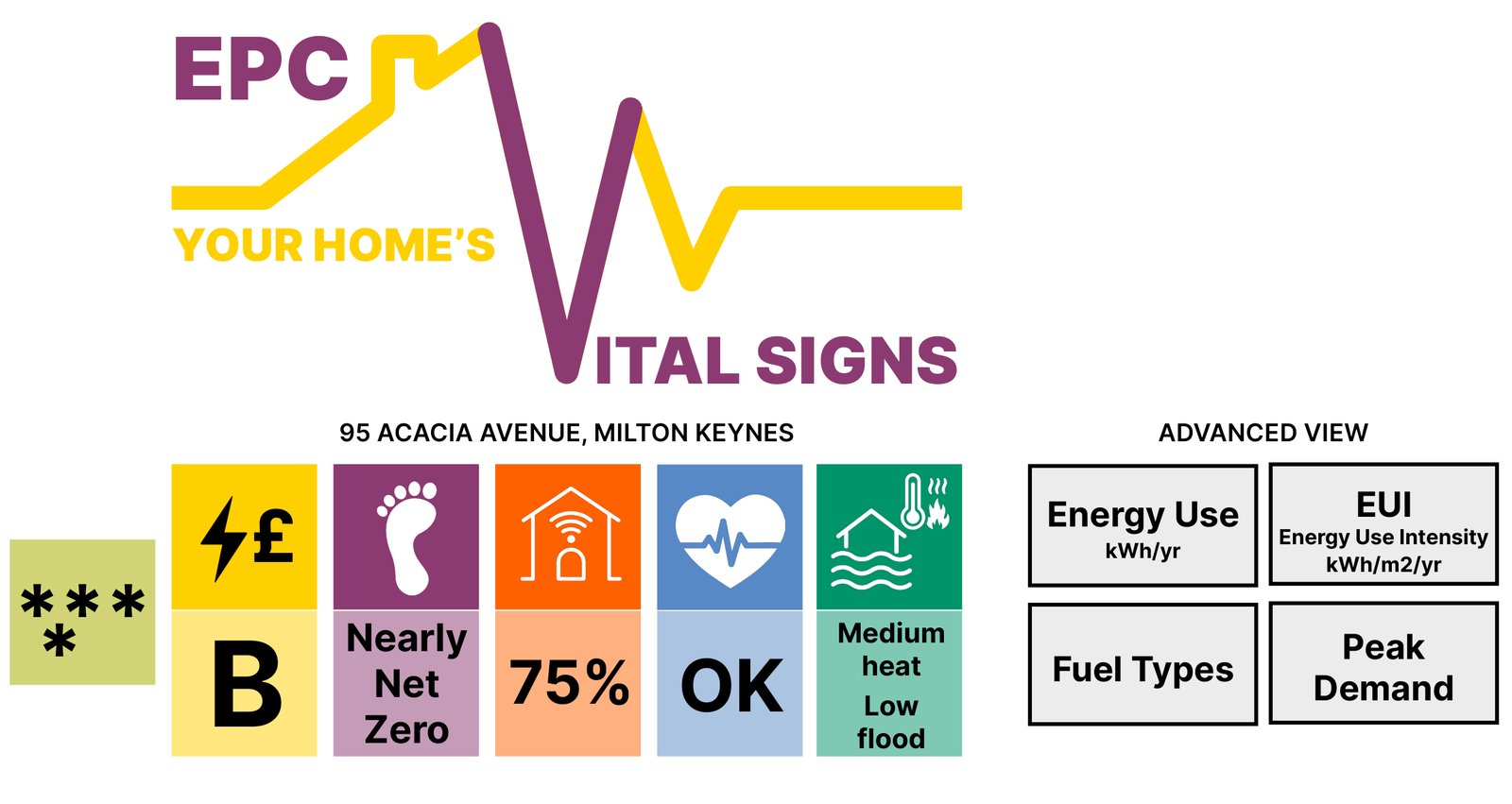
- Advanced view: Showing information used as the basis of the cost and carbon metric, for technical stakeholders and policy makers. Directly comparable and aligned with the Net Zero Carbon Building Standard. Energy use (kWh/yr), energy use intensity (kWh/m2/yr), fuel types and peak demand.
- Householder view: Well understood and engaging information, calculated based on information presented in the advanced view. These are lenses through which the building’s EUI, fuel type, etc. can be presented.
- Bespoke view: Users able to input additional information about the building’s use that is specific to the householder. A bespoke estimate of, for example, energy cost would be unique to their use-case.
3Introduce confidence ratings
Creating different levels of EPCs could both enable uptake of better performance monitoring, and support more householders to access an EPC.
Our engagement consistently revealed the need for more accurate data to be included in EPCs. Participants asked for the inclusion of data and information from:
- smart meters
- site testing, such as of the heat transfer coefficient and air-tightness
- validated build-ups and systems
Improving the accuracy of EPCs would benefit all stakeholders:
- improving reporting against targets
- informing better decision making
- increasing consumer trust
However, EPCs are currently low-cost, and 40% of homes do not have an EPC1. We need to protect and expand easy, low-cost access to EPCs for all householders, to ensure large portions of the population do not miss-out on the benefits they could provide.
A ‘confidence rating’ could allow more people to access EPCs at a lower confidence level, and the gradual increase in uptake of high confidence EPCs with real-world validated data.
High confidence rating EPCs would have a higher cost, however, banks and building societies could require these to provide access to low-cost green finance, they could be a requirement of government grants, or they could be used to unlock guarantees of performance.
Our survey respondents were generally in favour of higher confidence ratings being introduced. However, some saw risks in a provisional, 1* EPC. Careful thought would be required in their introduction so that these do not misinform stakeholders.
Confidence ratings could be aligned with the PCAF Financed Emissions Standard data quality scores for mortgages, to provide banks with more reporting accuracy and certainty. EPCs currently have a PCAF data quality score of 3.
Confidence ratings, from one to five stars
- 1*: A new provisional EPC, generated using stock model data. Providing a low cost or free EPC to the 40% of homes that do not currently have one.
- 2*: A SAP (and later Home Energy Model) calculation using default assumptions. PCAF data quality score 3.
- 3*: A SAP (and later Home Energy Model) calculation, with validated build-ups and systems, recorded within a Digital Building Logbook. PCAF data quality score 2B.
- 4*: Calculation, with validated build-ups and systems, and results from an airtightness test, recorded within a Digital Building Logbook. PCAF data quality score 2A.
- 5*: Ratings based on real world data measurements, including the measured heat transfer coefficient, and Smart Meter data. PCAF data quality score 1B.
1. Santander. Tomorrow’s Homes. April 2024
4Introduce optional metrics with improved user interface
Participants in our study felt that it was crucial for EPCs to go beyond energy efficiency, and instead to provide a holistic view of the health and resilience of a building.
Which? has conducted extensive research on how the interface of EPCs could be improved to increase engagement, and to educate consumers. This study took a sample of homeowners and tested different EPC formats and styles to better understand what worked best. Read their study here. We agree with the recommendation to utilise EPCs as an educational tool: more hyper-links, signposting, clear explanations and diagrams would help achieve this.
New metrics could expand the way we think about the performance of buildings, encouraging a more holistic sense of how buildings impact our health and wider systems. They should be clearly named, with ratings that are intuitive.
Smart energy metric
Example: 75% flexibility of energy use.
An indicator of the home’s capacity to use energy flexibly, helping to manage peak energy loads at grid level. This will be influenced by the inclusion of renewables, advanced controls, batteries and other technology.
The BRE suggest the inclusion of this metric in their report Energy Performance Certificates: enabling the home energy transition, and the Energy Systems Catapult has conducted research on a Smart Buildings Rating.
Health indicator
Example: OK. Your home might present a health risk to those with underlying conditions.
Research is required to determine how this metric would be calculated. One approach is to use a combination of:
- measured internal temperature and relative humidity data
- outdoor air quality data
- ventilation rate information
- thermal imaging to identify thermal bridges and condensation risk
Ratings could include: very good, good, OK and poor.
Resilience indicator
Example: medium heat risk, low flood risk.
The metric would present combined risks from overheating based on measured temperature data, and flood risk based on Environment Agency data and resilience measures in place.
5Improve recommendations
Participants were divided on whether recommendations should be removed or improved, many thought that a full retrofit plan should identify suitable measures and manage risk. However, the recommendations could be a good first step in engaging householders, if improved upon and the need for expert advice is made clear.
- Include recommendations for repair and maintenance actions, like replacing door seals and re-pointing.
- Clearly link recommendations to outcome metrics, including carbon reductions, health, and overheating mitigation.
- Include better information on the potential effects that energy efficiency measures may have on ventilation, damp, and overheating.
- Include signposting to more information and next steps, including recommendations on retrofit assessments and whole house plans.
- Energy and costs savings shown should be calculated with more nuance, including, for example, potential bounce-back effects.
- Present recommendations as packages of actions that work together.
- Include cost ranges for the recommendations and energy cost savings.
- Include recommendations for traditional buildings, considering Historic England guidance.
Linking recommendations to outcomes
Linking recommendations to outcomes would provide clear information on why each of the recommendations are made, and would incentivise action.
Recommendations might look a bit like this, with clear links to the outcomes they are intended to improve.
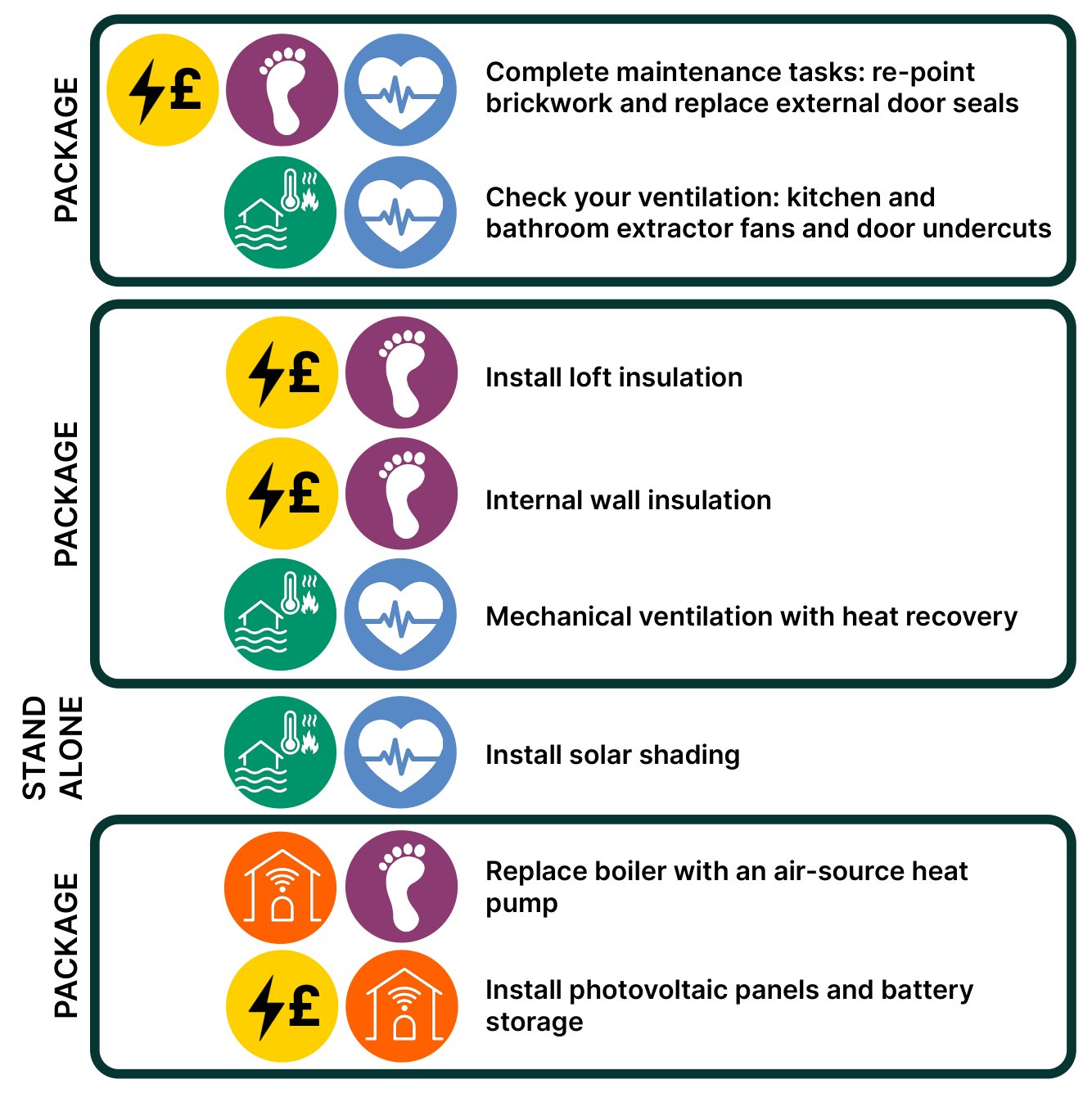
Note: these are just an example of how recommendations might be visually linked to outcomes, rather than a suggestion for what recommendations should be.
Recommendations should always be linked to further sources of advice, with clear information on next steps.
6Digital building logbooks
Digital Building Logbooks should be endorsed by government, developed by industry, and be used alongside, and feeding into, EPCs.
A Digital Building Logbook is a secure online tool, that brings together information on a building. Data is integrated, added and updated through a variety of sources. The logbook aims to show everything you might need to know about a building accessible in one place. Combining a DBL with an EPC could help validate build-ups and systems used to measure a building’s performance, linking to a higher confidence rating.
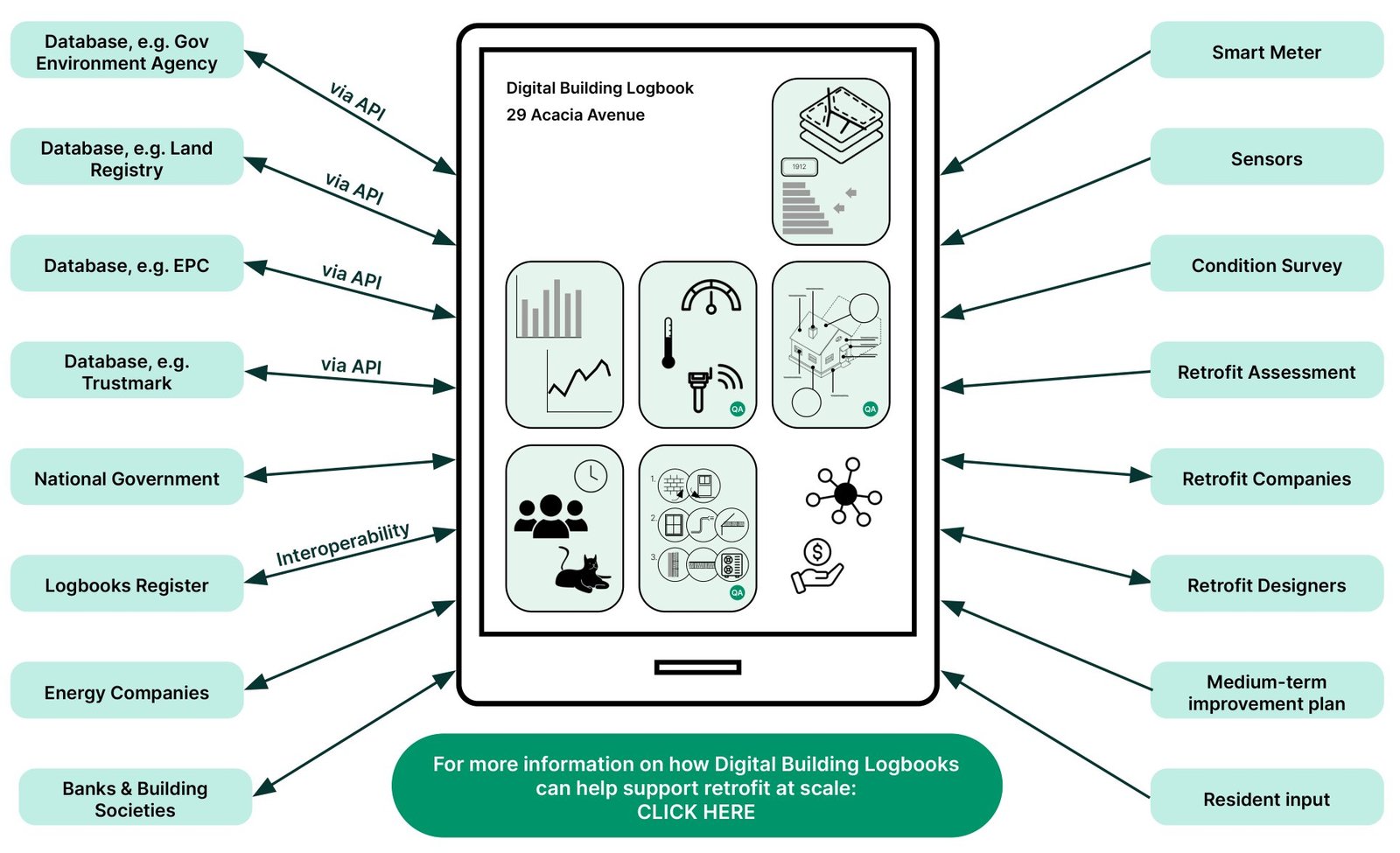
For more information on how Digital Building Logbooks can help support retrofit at scale, see our Digital Building Logbooks explainer.
7Introduce more trigger points
These are times when an action is taken in relation to a building that will ‘trigger’ a requirement for a new or updated EPC to be produced. Introducing more times when updates are required will help prevent individual EPCs from being out-of-date.
Currently EPCs are valid for 10 years, some organisations are calling for this to be reduced to 5 years, whereas others suggest that there might be opportunities to allow for more dynamic update. EPC validity is a major issue for many stakeholders, for example Which? has found that, where just one piece of information within the EPC is incorrect or out-of-date, the householder will often lose confidence in the entire document.
We suggest two complementary approaches to reducing the amount of out-of-date information within an EPC.
More trigger points
An updated EPC should be required whenever works are done that impact the performance of the home, for example:
- boiler replacement
- extensions
- works to fabric or windows
Trigger points might be linked to whenever building control, gas safety, MCS or other approvals are required.
85% of our survey respondents, at least moderately, supported the introduction of more ‘trigger points’ for when EPCs would be required to be updated.
Dynamic update
The information on inputs into an EPC should be made available to the householder, in a way that they can share this with consultants. Where small changes are made the original EPC could be edited, with just the changes updated. This would save time and cost, and allow surveyors and other consultants to check assumptions made by others.
Changes required to the validity period
Answers from standards, technical design and project planning stakeholders:
- Keep as it is: 3
- Shorten to 5 years: 4
- More trigger points for when updates are required: 18
- Make dynamic: 36
8National campaign and EPC re-brand: Vital Signs
By now, EPCs are about much more than energy efficiency. This holistic approach to building performance and health should be captured with a national re-brand and campaign.
They could look something like this: an EPC re-branded as Your Home’s Vital Signs, showing for each home:
- Cost: for example B, £1,250 typical energy cost per year at March 2024 energy prices
- Carbon: for example Nearly Net Zero, 2.5 tonnes of greenhouse gas emissions per year
- Confidence: for example four stars
- Smart energy: for example 75% flexibility of energy use
- Health: for example OK, your home might present a health risk to those with underlying conditions
- Resilience: for example medium heat risk, low flood risk
The vision
Vital Signs
A clear overview introductory page should be provided. Each metric would be hyper-linked to more information, and signposting. An advanced view would provide more technical information on the data behind each of the metrics presented to householders.
Further research required
This study has identified topics that require more research and exploration. This additional research could be planned as part of the roadmap, and conducted by relevant stakeholders or collaborative bodies, in partnership with government.
Roles
The change proposed would require those already working with EPCs to work differently, or provide additional services. New roles are also likely to be required. Engagement with the industry, and mapping of roles, would help plan for the workforce required and ensure that this change provides a growth opportunity.
Dynamic and bespoke input
Further research is needed to determine which metrics would be best enhanced with user inputs, who should be enabled to make bespoke inputs, and how this would affect the uptake of performance improvement measures.
Cost & carbon forecasts
Currently EPCs do not use forecasts of future fuel carbon intensity or cost. Research is required to understand the benefits of linking to forecasts, and how this might be implemented.
Health metric
Further research, likely led by a comprehensive literature review, is needed to understand how the proposed health metric might be calculated.
Links to archetypes
Archetyping is a tool used to understand what types of retrofit measures might be suitable for certain groups or typologies of homes. Linking the recommendations within an EPC to archetype-based guidance could give homeowners more information. The NRH’s work to date on archetyping is available here.
Balancing energy costs
Gas is cheaper than electricity, however, we need to switch to electricity to decarbonise the emissions from buildings. Using the carbon metric is one step towards incentivising low-carbon heating, however, research is required on the best strategy to incentivise this switch via energy pricing.
LITERATURE REVIEW
In the below table, you can find recommendations for EPC reform from a variety of sources. For each we have provided our own summary, and highlighted key areas of focus. This resource is provided so that our community can understand the scope of the discussion, and recommendations already on the table.
The National Retrofit Hub does not directly endorse any of the documents linked, but are grateful to these organisations for engaging within the conversation.
This is a live resource, if you’re aware of other reports or ongoing work on the subject, please get in touch at info@nationalretrofithub.org.uk.
Please note, this list isn’t an endorsement by The National Retrofit Hub but we hope having all the information in one place will be helpful!
EPC REFORM CONSULTATION: OUR RESPONSE
Since May 2024, the National Retrofit Hub has been conducting an in-depth exploration into how EPCs could be reformed to enable the local delivery of good quality retrofit at scale. We conducted cross-sectoral engagement to build a consensus on the change needed.
We welcome the Government’s EPDB Framework Consultation, and hope to continue engagement to ensure EPCs deliver on their full potential.
This document should be read alongside the National Retrofit Hub Report ‘The Future of Energy Performance Certificates: A Roadmap for Change’.
Read our full response here.
WORKSHOP INSIGHTS
On 20th May, the National Retrofit Hub held an online workshop, bringing together members of our Working Group 1: Warm, Healthy, Net Zero Homes and Working Group 2: Supply Chain Products and solutions, plus other interested members of our network. There were 100 attendees at the meeting, with representatives with the following types of roles within the retrofit sector:
Consultants, designers and retrofit coordinators
Project managers
Planning consultants and officers
Researchers and academics
Policy makers / advisors
Social housing providers and estates managers
Energy modellers
Technical specialists and standards authors
Lecturers and training providers
Andrew Parkin of the Property Energy Assessors Association (PEPA) gave the audience an overview of the EPC process, and changes to date. We then presented the audience with a summary of existing recommendations, based on the literature review, and gathered their feedback through a mentimeter survey, and via comments in the zoom chat. We discussed the following themes:
Metrics
Consumer awareness
Upgrade recommendations included within EPCs
Validity period
Scope and purpose of EPCs
EPC data access
The NRH is supported by Innovate UK, The MCS Foundation, our partners and sponsors.
Our work on EPC reform is sponsored by: