How do we connect RMI builders, working in homes day to day, with the confidence, skills and drive to retrofit at the same time? What would give businesses the confidence to invest in new skills? And how will we ensure we are delivering the full benefits possible from retrofit?
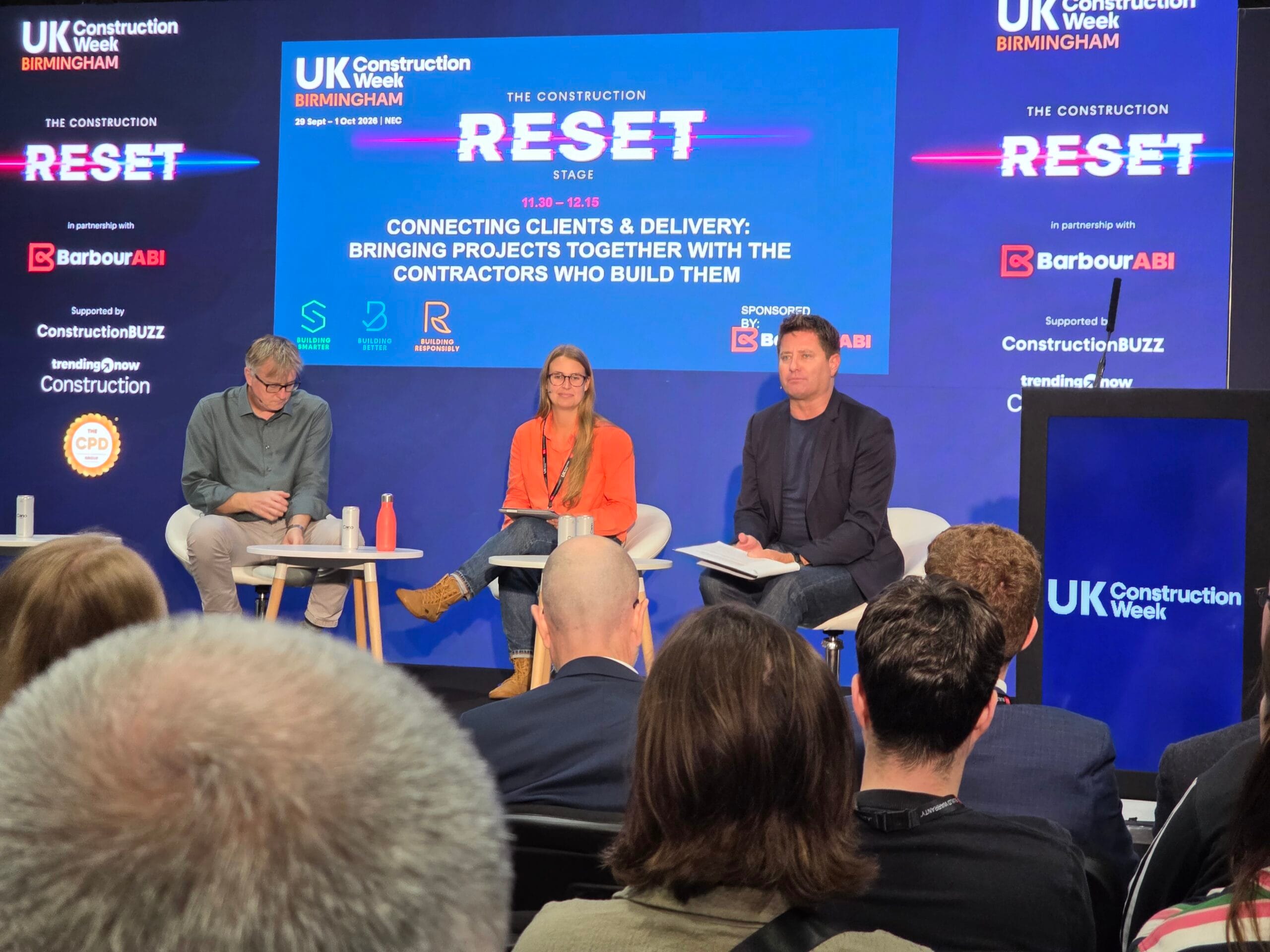
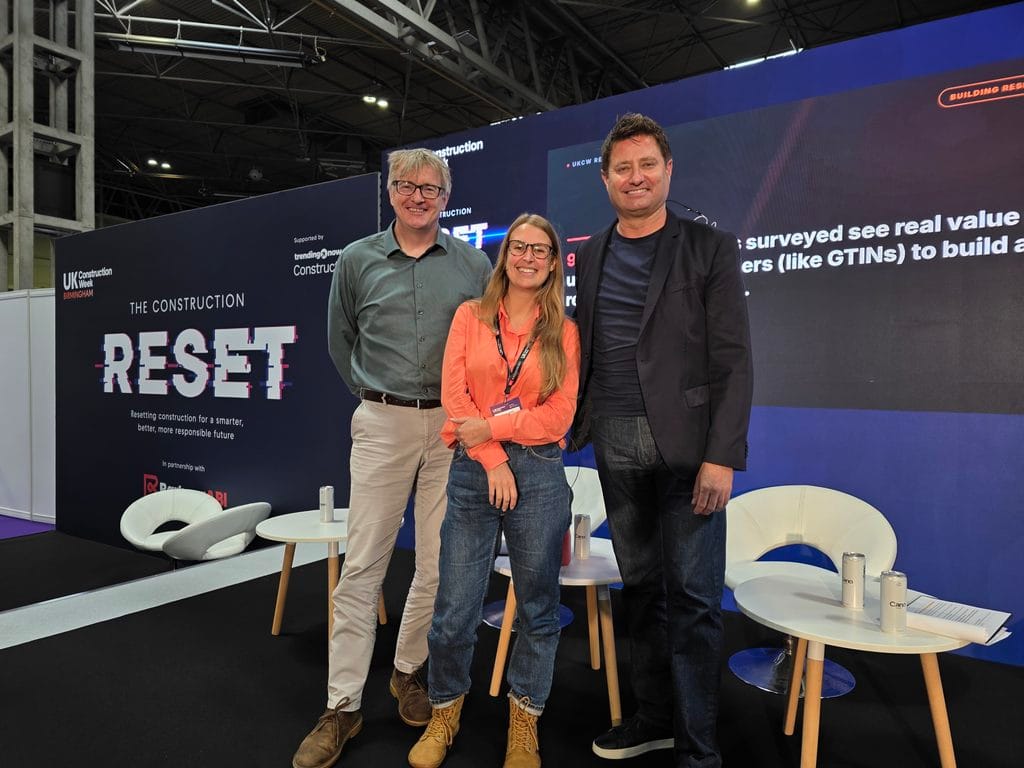
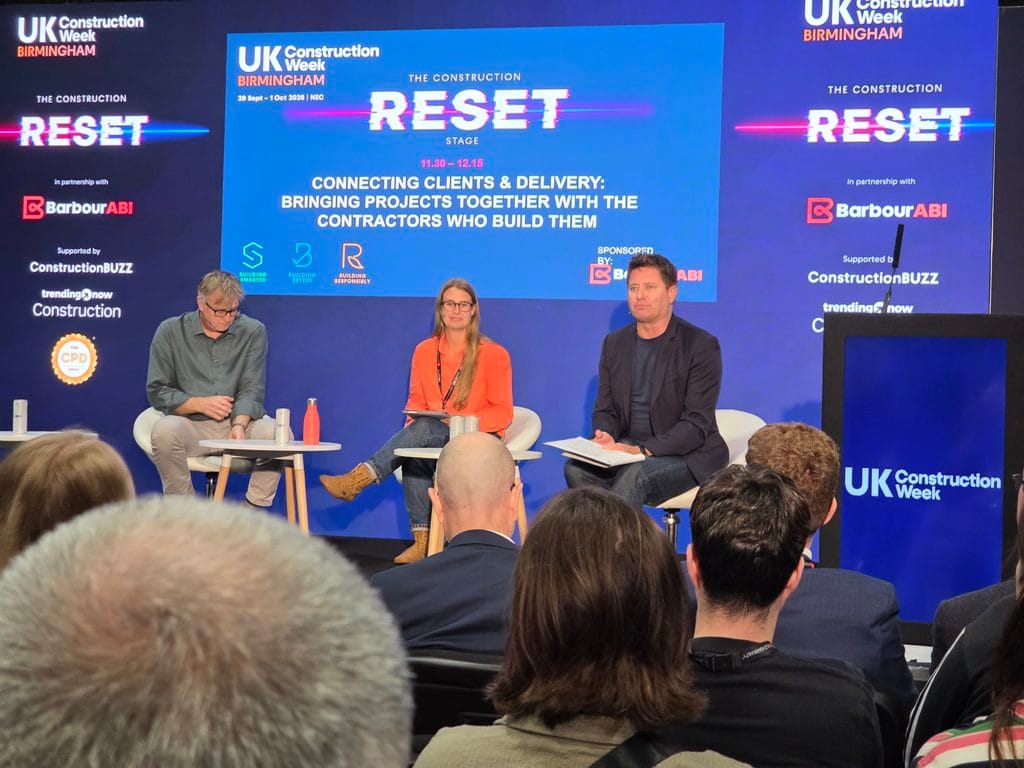
These questions ran through three discussions involving the National Retrofit Hub at UK Construction Week. Our Co-Director Rachael Owens joined a panel hosted by George Clarke on construction delivery, then chaired two sessions exploring how retrofit can grow beyond short-term grants and demonstrate its wider value.
Connecting the people who improve our homes
On George Clarke’s panel, Rachael described how the improvement and retrofit sector can be fragmented and disconnected. Local known and trusted builders carry out repairs and extensions. A different type of contractor will deliver grant funded retrofit programmes, complying with PAS and other standards. At the same time a small but high-quality sector of specialist retrofit designers, contractors and one-stop-shops are delivering retrofit for those ‘able-to-pay.’ Each has something to contribute, but they do not always work as part of a connected system. What we want to work towards is a more connected Home Improvement Sector, where experience delivering grant funded work can prepare contractors to deliver for other householders, and SMEs can build their skills in the private sector to break into the grant-funded space.
For many households, the opportunity starts with work they were going to do anyway. A builder fitting a kitchen or constructing an extension is well placed to notice where an energy upgrade might make sense. To raise that conversation confidently, they need a sound understanding of how the home works holistically, including its thermal performance, and ventilation needs.
Rachael argued for stronger links with the repair, maintenance and improvement sector, and for a quality assurance landscape that works across different types of delivery. She also described the barriers smaller firms face when trying to take part in larger programmes. Long, complex and resource intensive procurement processes can exclude capable local businesses, even when those firms are already trusted by the households they serve.
Ed McCann of Expedition Engineering brought a perspective from major infrastructure, where the distance between those commissioning a project and those doing the work can be much greater. The scales differ, but the discussion returned to the same principle: clients need to understand delivery and create the conditions for people to do the work well.
Building a market that lasts beyond grants
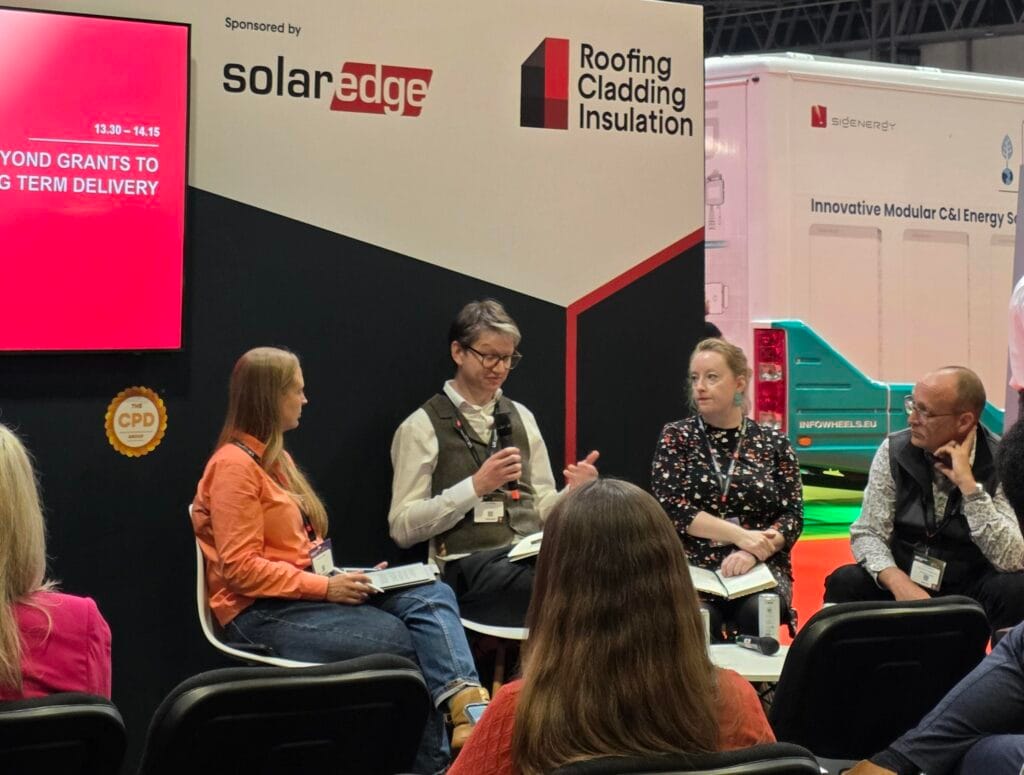
Rachael’s first chaired session, The Retrofit Reset: Beyond Grants to Long Term Delivery, asked what it would take to make retrofit work for more households, including those who don’t qualify for a grant. She was joined by Rufus Grantham of Living Places, Sarah Fletcher, a researcher at London South Bank University, and Carl Bairstow of Efficiency North.
Rufus described the gap between public grants and what many households can afford to pay themselves. Energy bill savings alone often cannot cover the upfront cost of substantial work. He proposed patient investment that could help develop projects across neighbourhoods and give other investors confidence to take part. But money alone would not build a market. “You need trust on the ground,” he said. Working in one place over time would let residents see improvements in neighbours’ homes and give local firms a more dependable pipeline of work.
Sarah challenged the way retrofit is offered to households. People already spend money improving their homes because they want them to work better for their lives. Yet the retrofit sector often approaches them separately, with measures that have little connection to the work they are planning. If a kitchen is being renovated, that might be the right moment to discuss insulation while the room is already being changed. Returning after the new kitchen is finished is a much harder conversation.
“We spend hundreds of millions of pounds in aggregate across all of these schemes trying to persuade people to want things that are free,” Sarah observed. Her point was that the sector needs to understand what people value about their homes and make retrofit part of an offer that responds to those priorities.
Carl focused on what would give businesses the confidence to grow. Standards can create demand, but firms need to believe the work will continue if they are to recruit and train. Responding to the familiar concern that the supply chain is too small, he urged the sector to act: “We just need to crack on.”
Rachael drew out the relationship between those points. Landlords want a supply chain ready to meet stronger requirements, while businesses need a dependable market before they can expand. The design of standards matters too. Their effect will depend on what improvements they require, how they are enforced and which exemptions apply.
Grants will remain important, particularly for households who need support most. The opportunity is to design them so that each programme also helps build the skills and local capacity needed for the work that follows.
Measuring the difference retrofit makes
Rachael’s final session, Beyond Energy Savings: Measuring the Full Impact of Retrofit, turned to a question that follows every investment: what changed for the people living in the homes?
Andrew Spencer of Equans UK & Ireland described the net zero neighbourhood project in Brockmoor, Dudley. Rather than starting with a target number of homes, the team asked how to decarbonise a place. That opened up a conversation about residents’ priorities and improvements across the neighbourhood. “For us, the starting point is always around value and outcome,” he said.
Ann-Marie Fallon of the Passivhaus Trust brought the discussion inside the home. Energy performance matters, but so do ventilation and the conditions people experience every day. She argued for looking at “more than just energy outcomes” and checking whether the work delivers the comfort and indoor air quality intended.
Michael McLaughlin of LHC Procurement Group spoke about social value through the lens of public procurement. “We have to understand what matters for local people,” he said. A measure of work completed cannot, on its own, show whether residents feel better in their homes or whether the project has met a neighbourhood’s priorities.
Rachael challenged the assumption that any retrofit project will deliver the same health and wellbeing benefits. The way a project is designed and delivered affects the result. Better evidence should help us understand which choices make the greatest difference, while keeping measurement proportionate to the work.
Across the three sessions, one message kept returning. We need to connect retrofit with the work already happening in homes, create enough certainty for people to invest in delivering it, and learn whether those improvements achieve what residents need. That is how individual projects can help build a stronger system.